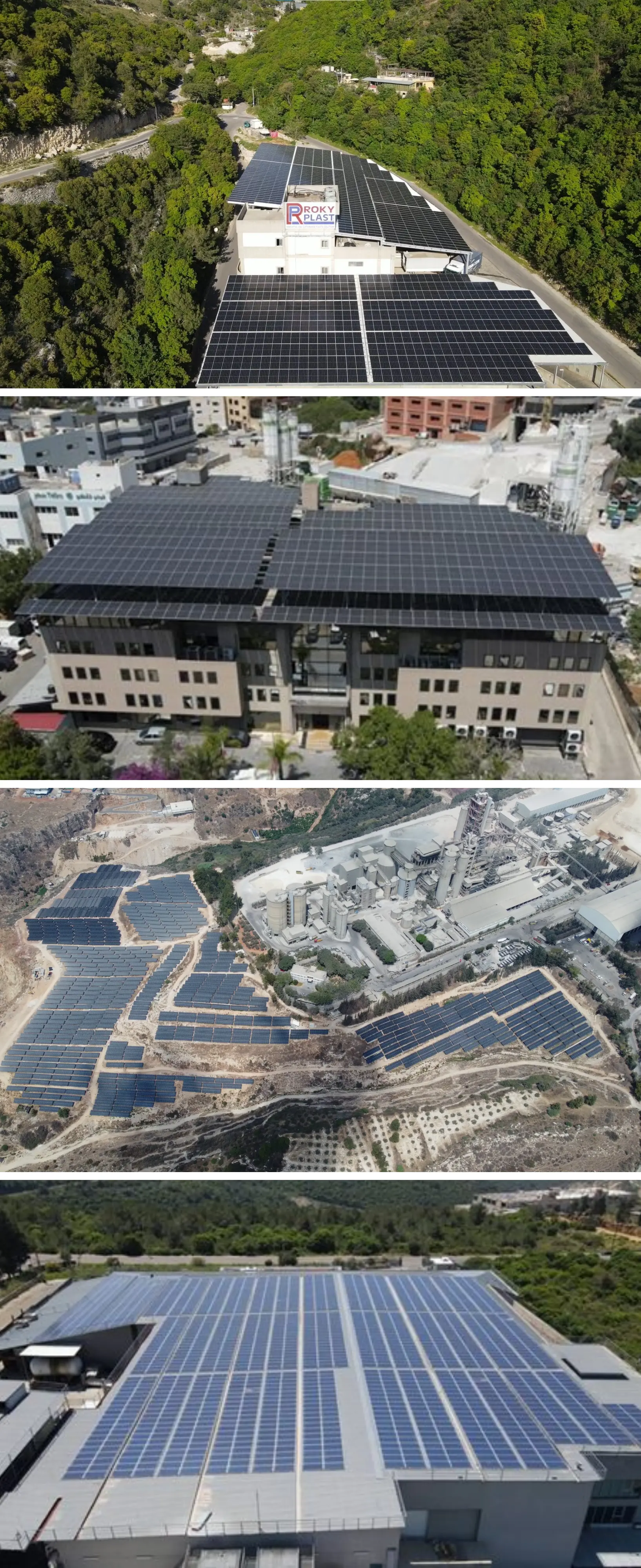
Solar Energy for Factories in Lebanon: What Business Owners Need to Know
For a factory, electricity is not simply another monthly expense. It keeps production lines moving, equipment operating and orders on schedule. When the power supply is unreliable, the consequences can include interrupted production, delayed deliveries and greater dependence on private generators.
This is why solar energy has become an important consideration for factories across Lebanon. It can help manufacturers produce part of their electricity on-site, reduce dependence on conventional energy sources and build a more resilient energy strategy.
However, installing solar panels for a factory is not the same as purchasing a standard system for a home. Industrial facilities have different operating schedules, energy requirements, safety considerations and plans for future growth. A successful project therefore begins with understanding the business—not simply choosing panels and inverters.
Why Are Lebanese Factories Turning to Solar Energy?
Factories often consume significant amounts of electricity during working hours, which usually overlap with the hours when solar panels produce energy. This makes many industrial facilities well suited for solar power.
Greater energy independence
Producing electricity at the facility can reduce reliance on the grid and private generators. Solar may not replace every existing source, but it can become an important part of a more diversified energy system.
Better operational continuity
Power interruptions can disrupt production, affect machinery and delay deliveries. When solar is combined with the appropriate supporting equipment, it can contribute to a more resilient energy setup. The level of backup available depends on how the system is designed and which equipment the factory needs to keep operating.
More predictable long-term planning
Generator fuel and conventional electricity costs can change. A properly planned solar installation gives a business an on-site energy-producing asset that can support its operations for many years.
Stronger environmental positioning
Customers, investors and international partners increasingly consider how companies manage their environmental impact. Using renewable energy can support a factory’s sustainability objectives and strengthen its position when working with organizations that evaluate the environmental practices of their suppliers.
Is Every Factory Suitable for Solar Energy?
Many factories can benefit from solar energy, but suitability should never be assumed. A professional assessment should consider how the facility operates and what the business wants the project to achieve.
Important factors include:
- The factory’s electricity consumption and operating hours
- The amount and condition of available roof or land space
- Shading from nearby buildings, structures or equipment
- Current dependence on generators and grid electricity
- Which operations must continue during an outage
- Planned machinery, production or facility expansion
- The condition of the existing electrical infrastructure
A factory with high daytime consumption and suitable installation space may be a strong candidate. Another facility may require a different approach because it operates mainly at night, has limited space or needs to support specialized equipment.
The objective is not to install the largest possible system. It is to develop a solution that fits the factory’s actual requirements.
Solar Panels Alone or Solar With Batteries?
One of the first decisions is whether the business needs solar generation alone or a system that also includes battery storage.
Solar panels generate electricity when sufficient sunlight is available. A system without batteries can help offset daytime consumption, but it does not automatically provide power during every outage. Its operation depends on the complete system configuration.
Batteries store energy for later use. They can help a factory support selected operations when solar production is low or another source of electricity is unavailable.
However, adding batteries does not mean that every machine can operate indefinitely. The system must be designed around clearly prioritized loads and the level of backup the business actually requires.
Before selecting equipment, factory owners should ask:
- Is the main objective to reduce generator dependence?
- Does the factory require backup during power cuts?
- Which machines or departments are essential?
- How long must critical operations continue?
- Does the facility operate during the day, at night or around the clock?
These business requirements should guide the solution.
What Happens During a Commercial Solar Project?
Understanding the facility
The solar provider reviews the factory’s electricity consumption, operating schedule, existing power sources, available space and business objectives.
Assessing the site
The proposed installation area and relevant infrastructure are inspected. This helps identify physical limitations, access requirements and conditions that may influence the project.
Designing the system
The solution is developed around the facility’s energy profile, physical conditions and operational priorities. The equipment should form part of one integrated system rather than a collection of unrelated products.
Preparing the proposal
The business should receive a clear explanation of the proposed solution, main components, project stages, warranties and responsibilities.
Installation and commissioning
Once approved, the equipment is installed, connected, tested and commissioned before the system enters normal operation.
Monitoring and support
The relationship should not end when the installation is complete. Monitoring, preventive maintenance and responsive after-sales support help protect system performance over time.
Common Mistakes Factory Owners Should Avoid
Choosing solely based on the lowest quotation
A lower initial price does not necessarily provide better long-term value. Important differences in design, equipment quality, installation standards, warranties and support may not be visible when proposals are compared only by their total price.
Focusing only on panel wattage
Panels are only one component of a complete solar system. Inverters, batteries, mounting structures, electrical protection, monitoring and installation quality all influence the result.
Treating every factory the same
Two factories of a similar size may have completely different energy requirements. Their machinery, working hours, available space and backup priorities may require different solutions.
Ignoring future expansion
If the company expects to add production lines, extend its operating hours or expand the facility, this should be discussed before the solar system is designed.
Overlooking after-sales support
Commercial solar is a long-term asset. Factory owners should understand who will monitor the system, respond to problems and provide ongoing maintenance after installation.
How to Choose a Solar Company for Your Factory
The right solar partner should be able to manage more than equipment supply. Factory owners should evaluate whether the provider can understand the facility, develop the complete solution and remain accountable throughout the project.
Before selecting a solar company in Lebanon, ask:
- Has the company completed commercial or industrial projects?
- Can it provide relevant project references?
- Does it handle consultation, engineering, supply, installation and integration?
- Which equipment manufacturers does it work with?
- Are the proposed warranties and responsibilities clearly documented?
- Does it provide monitoring, maintenance and after-sales support?
- Can it adapt the project to the factory’s future plans?
A credible provider should also explain its recommendations in clear business language. Factory owners should understand what the proposed system is designed to accomplish and where its limitations are.
Building a Long-Term Energy Asset
Solar energy can help Lebanese factories reduce dependence on traditional power sources, strengthen energy resilience and support long-term operational planning. However, the value of the project depends on how well the solution fits the facility.
The strongest industrial solar projects begin with the factory’s consumption, operating hours, critical processes and future plans. Technology selection comes afterward.
ASACO has delivered commercial, industrial and large-scale energy projects since 1998. Its work covers consultation, engineering, design, supply, installation, integration and ongoing support, giving businesses one accountable partner throughout the project.
Businesses considering solar energy for their factories can contact ASACO to discuss their facilities, operational priorities and energy requirements.